The Aethergrave
Overview
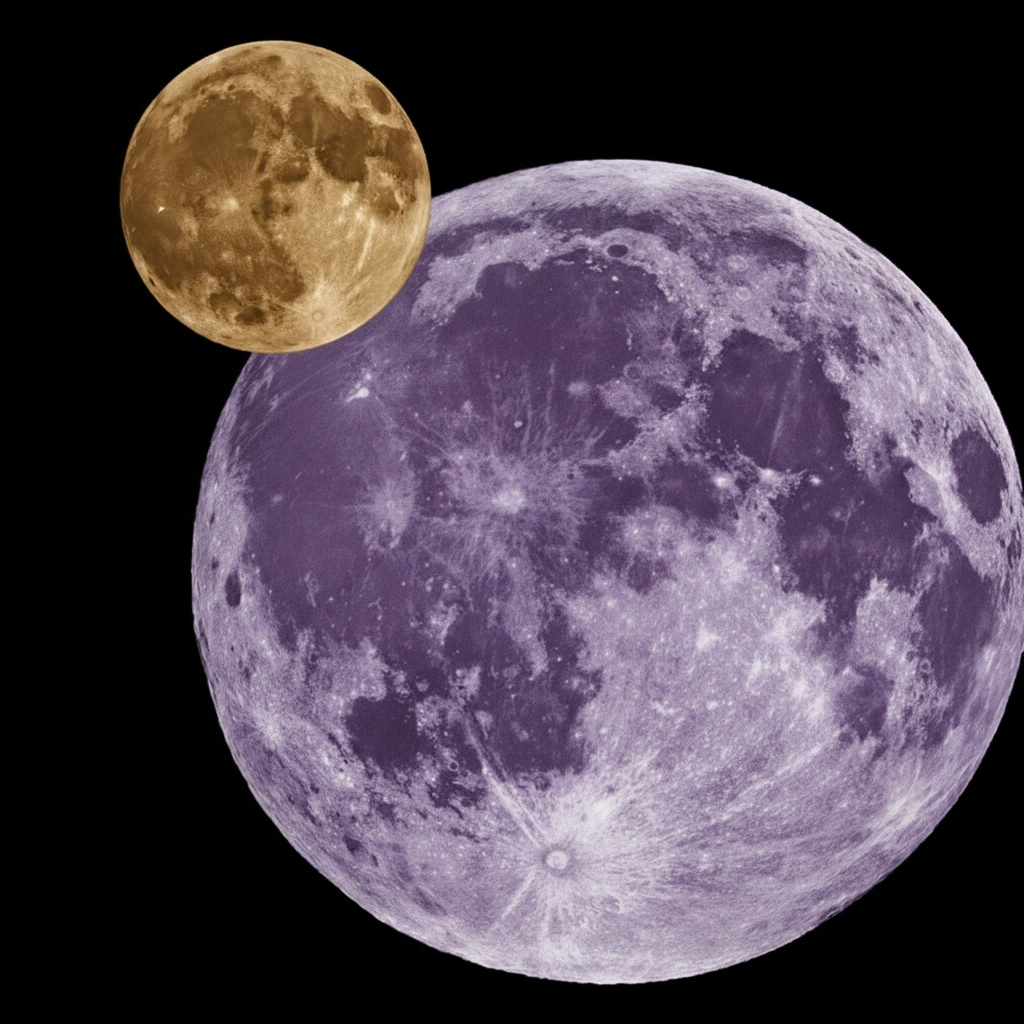
The Aethergrave is the great wound of Velthuryn.
It was born in the Shattering, when resonance destabilized across the world and tore open the land itself. Beneath the Trine Peaks and along fault lines that still hum in violet tones, reality ruptured. Stone split. Valleys collapsed. Entire ridgelines sank into a widening chasm that no map fully captures.
Yet the broken earth was only the visible injury. The true devastation came from what the rupture did to life.
The Aethergrave seized the inherent resonant energy within every living thing and amplified it beyond natural limits. In a single catastrophic surge, sorrow deepened into despair, shame curdled into self-destruction, cruelty swelled into monstrosity. At the same time, devotion hardened into miracles, love ignited into sacrifice, and courage became an anchor against annihilation.
This amplified emotional force is known as Resonance.
Resonance erupted outward from the Grave in violent waves during the Shattering. Though the initial surge has long since passed, the world still hums with its aftershocks.
The Aethergrave does not create evil. It intensifies what already exists.
Geography
The Aethergrave exists entirely within the western continent. Its path is neither random nor straight, but it is precise.
The fracture begins at the western tip of Lucilvis Lake, directly along the border between Ohlai Steppe and the Bastion of Aurex. What first appeared during the Shattering as a rupture beneath the lake’s western basin tore outward into dry land within days. Shorelines sank. Villages vanished. Sections of water crystallized briefly into griefglass before shattering again.
From Lucilvis Lake, the primary fracture extends southwest across high plains before bending westward. It then runs for roughly seven hundred miles along the southern border of Ohlai Steppe and the northern frontier of Gravenreach. This long shared corridor is known as the Long Scar. It is the most heavily fortified and monitored stretch of the Aethergrave.
At the western end of that seven hundred mile border, the Grave splits into a branching Y. The southern branch angles southwest along the Gravenreach and Nokhul Vale border. Here, resonance storms are frequent, river corridors distort unpredictably, and stone escarpments show signs of periodic collapse. Gravenreach engineers and Nokhul stewards maintain reinforced watch stations, but several settlements have been relocated over the centuries due to fracture expansion.
The northern branch turns northwest along the Nokhul Vale and Ohlai Steppe boundary. It then edges fifty to seventy miles directly north along the Aeterron and Ohlai Steppe border. This northernmost segment is often called the Quiet Verge. Unlike the Long Scar, it manifests less as open chasm and more as saturation field. Oaths sworn here sometimes destabilize. Memory distortions are reported by travelers. Aeterron scholars consider this region one of the most instructive resonance environments in the world.
Across its western span, the Grave expresses itself in several recurring forms:
* Sheer violet-lit chasms through Steppe grasslands
* Terraced collapse zones along the Gravenreach escarpments
* Subsurface griefglass veins near Lucilvis Lake
* River-channel distortions along the Nokhul frontier
* Quiet resonance plains along the Aeterron border
The Grave does not follow political logic, yet it has reshaped every border it touches.
Resonance
Resonance is amplified emotional energy made real.
All living beings carry inherent resonant imprint. Under ordinary conditions, this energy diffuses harmlessly into the world. The Aethergrave disrupted that balance by magnifying emotional states into structural consequence.
Resonance obeys several consistent principles:
- It amplifies existing emotion rather than inventing new states.
- It binds most strongly to moments of extreme intensity.
- It interacts with place as much as with people.
- It can stabilize or destabilize depending on its emotional source.
- It never remains entirely inert.
This is why collective grief can stain a battlefield for generations. It is why unified defense can hold stone together during collapse. It is why certain valleys feel heavy with memory while others feel charged with possibility.
Resonance is not morality. It is pressure applied to emotion until that emotion acquires consequence.
For details on Resonance mechanics, see this page: Resonance Mechanics
Griefglass
As Resonance spread outward during the Shattering, some of it condensed.
Where emotional amplification became too dense to dissipate, it crystallized into violet-black formations embedded in land, air, and water. These formations became known as griefglass.
Griefglass is frozen amplified emotion.
It appears in several states of stability:
- Dormant glass that holds stabilized resonance and can be shaped carefully
- Reactive glass that responds to nearby emotional intensity
- Volatile glass that fractures unpredictably under stress
- Harmonic deposits that emit tonal resonance during rare alignments
Griefglass can power lenses, oath-engines, defensive constructs, and arcane tools. It can be refined into civic infrastructure or weaponized for devastating effect.
Every use carries risk. When griefglass fractures under emotional strain, the resonance within may surge outward in unpredictable form.
Echo Adversaries
In some tragic cases, the surge of amplification during the Shattering trapped individuals at the peak of emotional intensity.
These imprints were sealed within griefglass deposits or embedded into Grave-saturated terrain. When containment fails, they manifest as Echo Adversaries.
Echo Adversaries are resonance constructs shaped from a single amplified emotional state.
They may embody:
* A tyrant’s cruelty distilled into predatory dominance
* A martyr’s sacrifice hardened into relentless judgment
* A coward’s fear transformed into desperate violence
* A grieving parent’s sorrow turned to annihilating wail
They are not ghosts. They are not undead. They are unresolved amplification given form. Some can be calmed through emotional reconciliation. Others shatter only when confronted directly.
Gravefronts and Containment
The boundaries where stable land meets active fracture are known as Gravefronts. These zones fluctuate in intensity and are often categorized into tiers of instability:
Drift regions where emotional amplification is subtle. Saturation corridors where oaths strain and terrain shifts. Shear fields where memory distortion and identity bleed occur. Breach sites where open fracture and Echo manifestation are common.
States along the western continent maintain watch posts, warding pylons, and regulated exclusion zones. Even rival powers exchange intelligence when fracture widening threatens trade or migration routes.
The Grave punishes isolation.
The Shared Wound
All cultures of Velthuryn agree on one truth: The Aethergrave is the world remembering its own breaking.
It is not a god.
It is not a demon.
It is an amplifier.
Where fear dominates, fracture widens.
Where hope anchors, instability slows.
Though the physical wound lies only in the western continent, the reverberation of Resonance shaped every state and every border. The world lives with the consequences of amplification.
In Velthuryn, emotion is never without impact. Balance is not inherited. It is chosen.
And that choice is the heart of every story told beneath Solivar’s longbright and within the luminous deepglow.